
Jakob Norberg
I am a Professor of German Studies at Duke University.
My research focuses on German political thought.
BOOKS
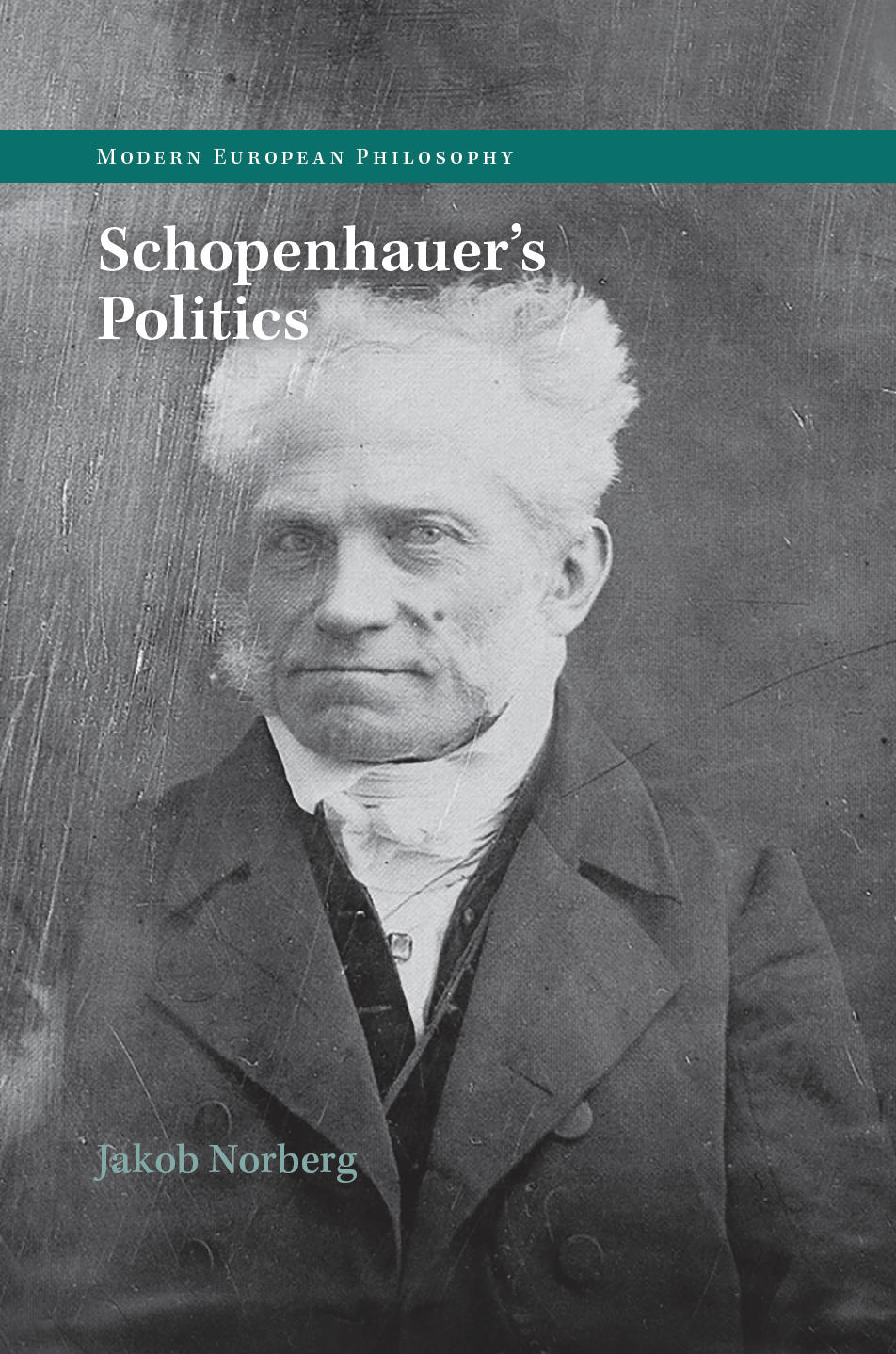
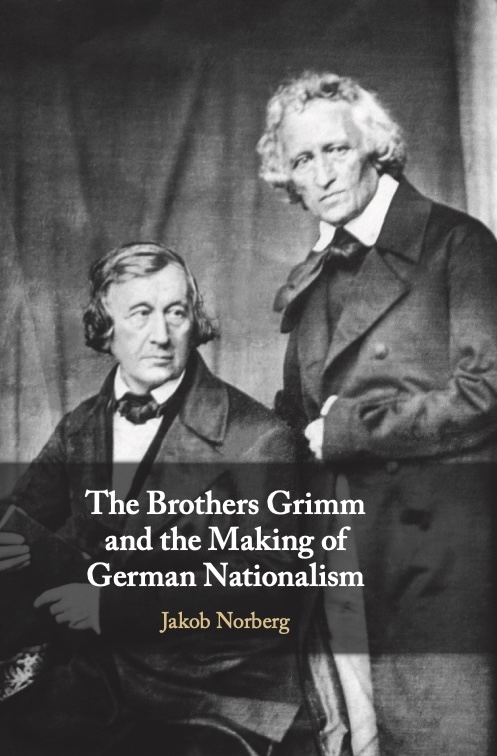
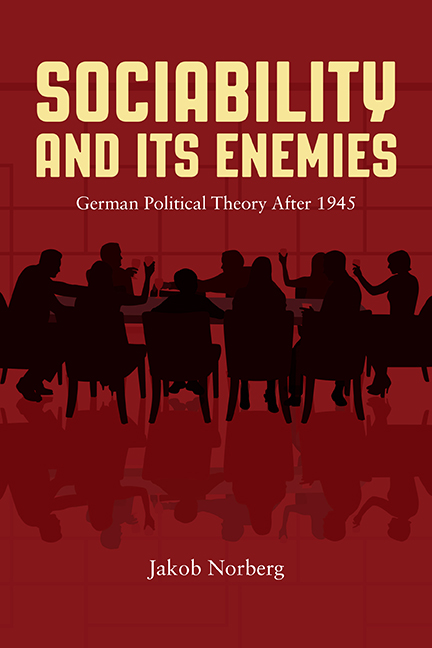
I am a Professor of German Studies at Duke University.
My research focuses on German political thought.
“On the Sofa: Bettina von Arnim’s Everyday Romanticism.” Forum Vormärz Forschung 30 (2024): 105–18.
“Revolutionary Romanticism: Carl Schmitt on Bettina von Arnim.” The Germanic Review 99.4 (2024): 533–48.
“The Infinite Conversation: Carl Schmitt on Parliamentarism and Romanticism.” Telos 208 (2024): 27–41.
“Schopenhauer’s Critique of the State.” The Schopenhaurian Mind. Ed. David Woods and Timothy Stoll. Routledge, 2023. 270–81.
“Schopenhauer on the Injustice of Slavery.” Schopenhauer-Jahrbuch/Schopenhauer Yearbook 104 (2023): 29–47.
“Herder and the Black Slave.” Co-authored with Priscilla Layne. Monatshefte 115.4 (2023): 553–72.
“The Mother Tongue at School.” Untying the Mother Tongue. Ed. Antonio Castore and Federico Dal Bo. ICI Press, 2023. 85–103.
“Schopenhauer’s Critique of Nationalism.” The German Quarterly 95.3 (2022): 277–292.
“After the Collective: Judith Schalansky on Post-Socialist Patterns of Thought.” Colloquia Germanica 53.1 (2021): 41–57.
“Philologisierung der Politik: Das Volk bei Jacob Grimm.” Zeitschrift für deutsche Philologie Beiheft 18 (2020): 119–32.
“Der Philologenkönig: Zum Machtanspruch der Grimmschen Sprachwissenschaft.” WestEnd: Neue Zeitschrift für Sozialforschung 1 (2020): 25–40.
“Adorno and Postwar German Society.” A Companion to Adorno. Ed. Peter Gordon, Espen Hammer, and Max Pensky. Wiley-Blackwell, 2020. 335–48.
“The Socialist Intellectual and the Public Sphere.” e-cibs: Communications of the International Brecht Society (2020). https://e-cibs.org/issue-2020-1/
“Anti-Capitalist Affect: Georg Lukács on Satire and Hate.” New German Critique 135 (2018): 155–74.
“The Tragedy of the Commonplace: Clichés in the Age of Copyright.” Fast Capitalism 15.1 (2018).
“German Literary Studies and the Nation.” German Quarterly 91.1 (2018): 1–17.
“Hasstext: Affekt und Engagement.” Engagement: Konzepte von Gegenwart und Gegenwartsliteratur. Ed. Jürgen Brokoff, Ursula Geitner, and Kerstin Stüssel. Vandenhoeck & Ruprecht, 2016. 269–86.
“Late Socialism as a Narrative Problem: Christoph Hein and the Limits of the Novella.” German Studies Review 38.1 (2015): 63–82.
“Political Concepts.” Blackwell Encyclopedia of Political Thought. Ed. Michael Gibbons. Wiley-Blackwell, 2015. 647–57.
“The Cliché as Critique and Complaint.” Forum 18 (2014): 1–10.
“Der Text als Phrase: Schillerfeier und geflügelte Worte.” Sprache und Literatur 44.2 (2013):
“The Banality of Narrative: Hannah Arendt’s Eichmann in Jerusalem.” Textual Practice 27.5 (2013): 743–61.
“Creative Destruction: Karl Kraus and the Paradox of Satire.” Seminar. 49.1 (2013): 38–51.
“On Display: Conditions of Critique in Austria.” Journal of Austrian Studies. 46.1 (2013): 23–45.
“The Truncated Road Movie: Thomas Brasch and the Berlin Wall.” Baltic Worlds 4.2 (2012): 22–4.
“Perspectives on Postwar Silence: Psychoanalysis, Political Philosophy, and Economic Theory.” German Politics and Society 29.4 (2011): 1–20.
“Day-to-Day Politics: Carl Schmitt on the Diary.” Telos 157 (2011): 21–42.
“Adorno’s Advice: Minima Moralia and the Critique of Liberalism.” PMLA 162.2 (2011): 398–411.
“The Discreet Community: Hugo von Hofmannsthal’s Der Schwierige.” Arcadia 46.1 (2011): 121–35.
“Arendt in Crisis: Political Thought in Between Past and Future.” College Literature 38.1 (2011): 131–49.
“The Unconscionable Critic: Thomas Bernhard’s Holzfällen.” Co-authored with Kata Gellen. Modern Austrian Literature 44.1 (2011): 57–75.
“Berlin som mnemotekniskt hjälpmedel: Walter Benjamin och Franz Hessel.” Tidskrift för litteraturvetenskap 41.1 (2011): 65–74.
“The Political Theory of the Cliché: Hannah Arendt Reading Adolf Eichmann.” Cultural Critique 76 (2010): 75–97.
“Disappearing Socialism: Volker Braun’s Unvollendete Geschichte.” Monatshefte 102.2 (2010): 177–91.
“‘Haushalten’: The Economy of the Phrase in Peter Handke’s Wunschloses Unglück.” German Quarterly 81.4 (2008): 471–88.
“The Black Book: Karl Kraus’s Etiquette.” Modern Austrian Literature 40.2 (2007): 45–64.
 Jakob Norberg